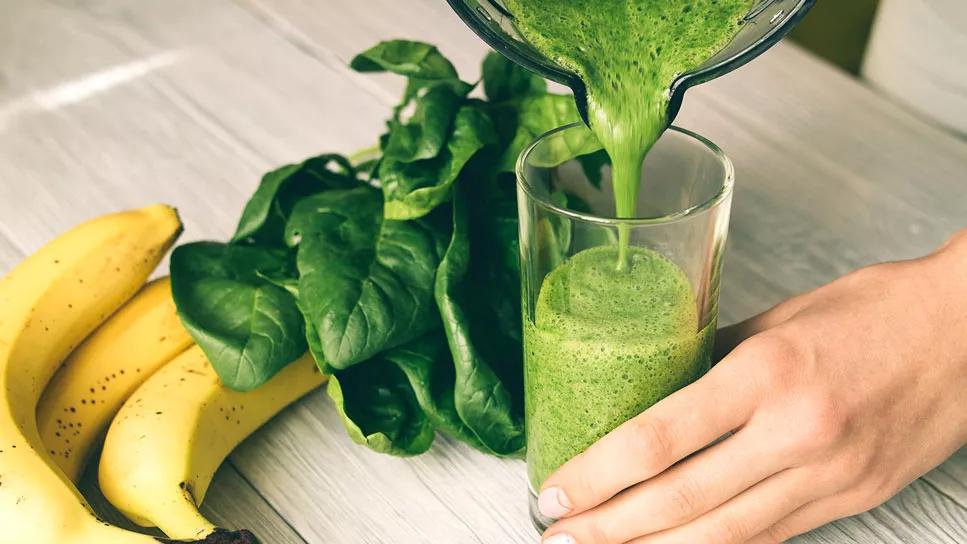

7 Reasons You Should Eat More Spinach
By Health Cleveland Clinic
May 22, 2026
It’s been more than 60 years since the cartoon hero Popeye debuted. Since then, the beloved sailor’s favorite dish — spinach — has gained a lot of fans. The average American today eats about 1.5 pounds of this leafy green vegetable every year.
“Spinach is one of the most nutritious foods you can eat,” says registered dietitian Kayla Kopp, RD, LD. “It’s also very easy to use. Raw or cooked, spinach is great in salads, appetizers, smoothies and main dishes.”
Is spinach good for you?
Spinach health benefits
Kopp shares seven reasons to eat more spinach.
Kopp shares seven reasons to eat more spinach.
1. Offers a low-calorie, low-fat source of nutrients
Two-thirds of a cup (100 grams) of raw spinach has 23 calories, 3.6 grams of carbohydrates, 3 grams of protein and zero cholesterol or fat. Nutrient-wise, a serving has approximately:
- 483 micrograms of vitamin K (402% of daily value).
- 469 micrograms of vitamin A (52% of DV).
- 194 micrograms of folate (49% of DV).
- 0.9 milligrams of manganese (39% of DV).
- 28 milligrams of vitamin C (31% of DV).
- 79 milligrams of magnesium (19% of DV).
- 0.19 milligrams of riboflavin (15% of DV).
- 2.7 milligrams of iron (15% of DV).
- 2 milligrams of vitamin E (14% of DV).
- 0.13 milligrams of copper (14% DV).
- 558 milligrams of potassium (12% of DV).
- 0.2 milligrams of vitamin B6 (11% of DV).
Two-thirds of a cup (100 grams) of raw spinach has 23 calories, 3.6 grams of carbohydrates, 3 grams of protein and zero cholesterol or fat. Nutrient-wise, a serving has approximately:
- 483 micrograms of vitamin K (402% of daily value).
- 469 micrograms of vitamin A (52% of DV).
- 194 micrograms of folate (49% of DV).
- 0.9 milligrams of manganese (39% of DV).
- 28 milligrams of vitamin C (31% of DV).
- 79 milligrams of magnesium (19% of DV).
- 0.19 milligrams of riboflavin (15% of DV).
- 2.7 milligrams of iron (15% of DV).
- 2 milligrams of vitamin E (14% of DV).
- 0.13 milligrams of copper (14% DV).
- 558 milligrams of potassium (12% of DV).
- 0.2 milligrams of vitamin B6 (11% of DV).
2. Protects against diseases
Spinach has a variety of antioxidants, including carotenoids like beta-carotene and lutein.
These natural chemicals (phytochemicals) protect plants — and you — from bacteria, fungi, parasites and viruses. “Antioxidants minimize the damaging effects of free radicals,” says Kopp.
These molecules can build up in your body, causing cell damage that leads to chronic conditions like cancer, autoimmune diseases and Alzheimer’s disease. And if you have diabetes, the antioxidant alpha-lipoic acid in spinach may keep glucose levels low and improve how you respond to insulin.
Spinach has a variety of antioxidants, including carotenoids like beta-carotene and lutein.
These natural chemicals (phytochemicals) protect plants — and you — from bacteria, fungi, parasites and viruses. “Antioxidants minimize the damaging effects of free radicals,” says Kopp.
These molecules can build up in your body, causing cell damage that leads to chronic conditions like cancer, autoimmune diseases and Alzheimer’s disease. And if you have diabetes, the antioxidant alpha-lipoic acid in spinach may keep glucose levels low and improve how you respond to insulin.
3. Lowers blood pressure
The high potassium levels in spinach (two-thirds of a cup has close to 600 milligrams) relaxes blood vessels and lowers blood pressure. “Potassium also helps your kidneys get rid of extra sodium,” says Kopp. “High blood pressure and excess sodium can lead to heart disease, stroke and kidney damage.”
Spinach is high in magnesium and folate, a B vitamin. These nutrients help you make nitric oxide, a molecule that lowers blood pressure. Spinach also has nitrates, chemicals that expand blood vessels. One study found that participants who drank a spinach beverage had lower blood pressure for up to five hours after finishing the drink.
The high potassium levels in spinach (two-thirds of a cup has close to 600 milligrams) relaxes blood vessels and lowers blood pressure. “Potassium also helps your kidneys get rid of extra sodium,” says Kopp. “High blood pressure and excess sodium can lead to heart disease, stroke and kidney damage.”
Spinach is high in magnesium and folate, a B vitamin. These nutrients help you make nitric oxide, a molecule that lowers blood pressure. Spinach also has nitrates, chemicals that expand blood vessels. One study found that participants who drank a spinach beverage had lower blood pressure for up to five hours after finishing the drink.
4. Boosts brain health
Spinach can keep your mind sharp. One study found that eating a half-cup serving of cooked spinach or other leafy greens every day slows age-related memory changes. The high levels of antioxidants, folate and phylloquinone (a form of vitamin K found in leafy greens) help protect brain cells.
The nutrients may also lower your risk of Alzheimer’s disease. They stop proteins from building up in your brain and lessen inflammation.
Spinach can keep your mind sharp. One study found that eating a half-cup serving of cooked spinach or other leafy greens every day slows age-related memory changes. The high levels of antioxidants, folate and phylloquinone (a form of vitamin K found in leafy greens) help protect brain cells.
The nutrients may also lower your risk of Alzheimer’s disease. They stop proteins from building up in your brain and lessen inflammation.
5. Improves gut health
Two-thirds of a cup of raw spinach has close to 2 grams of insoluble fiber. “Your body can’t easily break down this type of fiber, so you feel full longer,” notes Kopp. Fiber also adds bulk to stools, helping prevent constipation.
Two-thirds of a cup of raw spinach has close to 2 grams of insoluble fiber. “Your body can’t easily break down this type of fiber, so you feel full longer,” notes Kopp. Fiber also adds bulk to stools, helping prevent constipation.
6. Supports healthy blood
Spinach is rich in non-heme (plant-based) iron, making it an excellent choice if you follow a vegetarian or vegan meal plan. Iron helps your body make hemoglobin, a red blood cell protein that carries oxygen to organs and tissues. “Eating an iron-rich diet that includes spinach can help prevent iron-deficiency anemia and symptoms like fatigue,” adds Kopp.
Unfortunately, you don’t absorb non-heme iron from plant-based diets as well as you absorb heme iron from animal sources like beef, liver and chicken. That’s because certain compounds in spinach, like polyphenols and oxalic acid (oxalates), can attach to iron, affecting how much your body absorbs. “Oxalate is known as an ‘anti-nutrient’ because it decreases the amount of iron, magnesium and other minerals you take in from plant foods,” says Kopp.
Combining foods high in vitamin C with foods high in iron, like spinach, can maximize non-heme iron absorption. “Vitamin C (ascorbic acid) binds with iron, making it easier for your body to absorb both nutrients,” explains Kopp, who offers these food pairing suggestions:
- Cook spinach and potatoes together.
- Fix a smoothie with spinach, berries, citrus fruits and water. (Avoid using milk or milk alternatives, as calcium may affect iron absorption.)
- Make a spinach-walnut salad with raspberry vinaigrette.
Spinach is rich in non-heme (plant-based) iron, making it an excellent choice if you follow a vegetarian or vegan meal plan. Iron helps your body make hemoglobin, a red blood cell protein that carries oxygen to organs and tissues. “Eating an iron-rich diet that includes spinach can help prevent iron-deficiency anemia and symptoms like fatigue,” adds Kopp.
Unfortunately, you don’t absorb non-heme iron from plant-based diets as well as you absorb heme iron from animal sources like beef, liver and chicken. That’s because certain compounds in spinach, like polyphenols and oxalic acid (oxalates), can attach to iron, affecting how much your body absorbs. “Oxalate is known as an ‘anti-nutrient’ because it decreases the amount of iron, magnesium and other minerals you take in from plant foods,” says Kopp.
Combining foods high in vitamin C with foods high in iron, like spinach, can maximize non-heme iron absorption. “Vitamin C (ascorbic acid) binds with iron, making it easier for your body to absorb both nutrients,” explains Kopp, who offers these food pairing suggestions:
- Cook spinach and potatoes together.
- Fix a smoothie with spinach, berries, citrus fruits and water. (Avoid using milk or milk alternatives, as calcium may affect iron absorption.)
- Make a spinach-walnut salad with raspberry vinaigrette.
7. Protects eyesight
Lutein and another antioxidant called zeaxanthin in spinach are related to vitamin A and beta-carotene found in carrots. These antioxidants help protect your eyes against sun damage. They may also lower your risk of eye disorders, such as age-related cataracts.
One small study found that eating a half-cup of frozen spinach every day for two months increases lutein levels and eye pigment. High pigment levels may lower your risk of macular degeneration.
Because vitamin A is a fat-soluble vitamin, you’ll absorb more antioxidants if you have a healthy fat with your spinach. Kopp suggests eating fresh or cooked spinach with:
Lutein and another antioxidant called zeaxanthin in spinach are related to vitamin A and beta-carotene found in carrots. These antioxidants help protect your eyes against sun damage. They may also lower your risk of eye disorders, such as age-related cataracts.
One small study found that eating a half-cup of frozen spinach every day for two months increases lutein levels and eye pigment. High pigment levels may lower your risk of macular degeneration.
Because vitamin A is a fat-soluble vitamin, you’ll absorb more antioxidants if you have a healthy fat with your spinach. Kopp suggests eating fresh or cooked spinach with:
Is spinach better raw or cooked?
“Spinach is good for you, whether you eat it fresh or cooked,” says Kopp.
Cooked spinach provides more:
- Calcium.
- Vitamin A.
- Carotenoids.
- Fiber.
- Iron.
- Protein.
- Zinc.
Raw spinach provides more:
- Folate.
- Lutein.
- Vitamin C.
“Spinach is good for you, whether you eat it fresh or cooked,” says Kopp.
Cooked spinach provides more:
- Calcium.
- Vitamin A.
- Carotenoids.
- Fiber.
- Iron.
- Protein.
- Zinc.
Raw spinach provides more:
- Folate.
- Lutein.
- Vitamin C.
How much spinach should you eat?
“A cup of spinach counts toward the recommended two to three cups of vegetables adults should eat every day,” says Kopp. But people with certain conditions may want to opt for other leafy greens:
- If you’re prone to kidney stones, the high oxalate content of spinach may cause more stones to form.
- An inconsistent intake of vitamin K (which helps clot blood) can be a problem if you take blood thinners to prevent blood clots.
For most people, spinach is a colorful, healthy addition to a variety of dishes.
Health Cleveland Clinic
Compiled by http://violetflame.biz.ly from:
“A cup of spinach counts toward the recommended two to three cups of vegetables adults should eat every day,” says Kopp. But people with certain conditions may want to opt for other leafy greens:
- If you’re prone to kidney stones, the high oxalate content of spinach may cause more stones to form.
- An inconsistent intake of vitamin K (which helps clot blood) can be a problem if you take blood thinners to prevent blood clots.
For most people, spinach is a colorful, healthy addition to a variety of dishes.
Health Cleveland Clinic


:max_bytes(150000):strip_icc():format(webp)/Health-GettyImages-485349336-a27307ef473d46839977c46319e4cd41.jpg)
:max_bytes(150000):strip_icc():format(webp)/Health-GettyImages-2214346425-4202103bf51347cb94ffa009981f8726.jpg)
:max_bytes(150000):strip_icc():format(webp)/Health-GettyImages-1391934968-fb2b1ee824e24203ad3ece5f04a61be6.jpg)
:max_bytes(150000):strip_icc():format(webp)/Health-GettyImages-1456822611-a00a7efccbb643c785fa0958fc74074f.jpg)
:max_bytes(150000):strip_icc():format(webp)/Health-GettyImages-2196674658-3df0e3fbd7384b7e9b7830eea2405061.jpg)
:max_bytes(150000):strip_icc():format(webp)/Health-GettyImages-157374655-d1632775ad8d47978237fcd25df84288.jpg)
:max_bytes(150000):strip_icc():format(webp)/Health-GettyImages-1319904218-8899f16a57f2469da9432c1890db74fb.jpg)